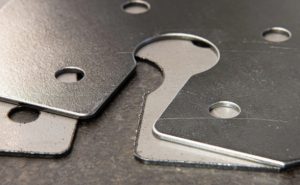
Yes, in almost all practical cases, oxide layers (heat tint, mill scale, cutting scale, or rust) must be removed before welding or coating carbon steel. Leaving them in place causes serious defects.Here’s a clear breakdown by process:Welding,metal deburring machine
| Type of Oxide | Must Be Removed? | Why / Consequences if Not Removed |
|---|---|---|
| Heavy black cutting scale (oxy-fuel/plasma) | YES – 100 % | Prevents fusion, causes porosity, lack of fusion, wormholes, cracking |
| Colored heat tint (straw → blue) from plasma/laser/oxy-fuel | YES | Thin oxides (especially blue Fe₃O₄) are very stable, act as a barrier, and cause lack of sidewall fusion and porosity |
| Light straw/yellow tint (very thin) | Usually yes | Still reduces weld quality; most codes require removal |
| Mill scale (from hot rolling) | YES | High risk of porosity, cracking (hydrogen from moisture trapped under scale), and lack of fusion |
| Light surface rust | Usually yes | If flaky or pitted → remove; tight light rust is sometimes tolerated in SMAW/GMAW, but not recommended |
Industry standards that require removal
- AWS D1.1 (Structural Steel): “Mill scale that can withstand vigorous wire brushing… may remain.” → In practice, most fabricators grind it off anyway. Heat tint and cutting scale do NOT withstand wire brushing → must be removed.
- ASME Section IX / B31.3 (pressure piping): Oxide must be removed from bevel and adjacent surfaces.
- ISO 9606 / EN 1011: Same requirement for all critical welds.
Best practice for clean welds
Grind or power-brush the cut edge and at least 25–50 mm (1–2 in) on both sides back to bright metal. Stainless steel brushes or flap discs are preferred (avoid contamination).Coating / Painting
| Type of Oxide | Must Be Removed? | Required Surface Prep Standard (Typical) |
|---|---|---|
| Heavy cutting scale | YES | SSPC-SP 10 / Sa 2½ – all scale and tint removed |
| Heat tint (colors) | YES | Same – tint counts as “tightly adherent mill scale” and prevents paint adhesion |
| Mill scale | YES | SSPC-SP 6 or better for most systems; primer will fail prematurely if left |
| Light rust | Usually yes | SP 3 power-tool or SP 10 if coating warranty is required |
Heat tint is especially problematic for high-performance coatings (epoxy, polyurethane, zinc-rich primers) because the oxide layer is glassy, non-porous, and chemically inert → paint peels off in sheets.Exceptions (very rare) deburring machine
- Some self-shielded FCAW wires (e.g., Lincoln NR-232, Hobart Fabshield) tolerate light mill scale and very light rust.
- Temporary welds or non-critical farm repairs sometimes ignore light rust.
Bottom lineFor any weld or coating that must last or meet code:
Remove ALL heat tint, cutting scale, mill scale, and rust back to bright metal.
It only takes a few minutes with an angle grinder or flap disc and saves expensive failures later.